2026-10-22 · Marco Ruiz
How to Get a Dumpster Permit in San Francisco
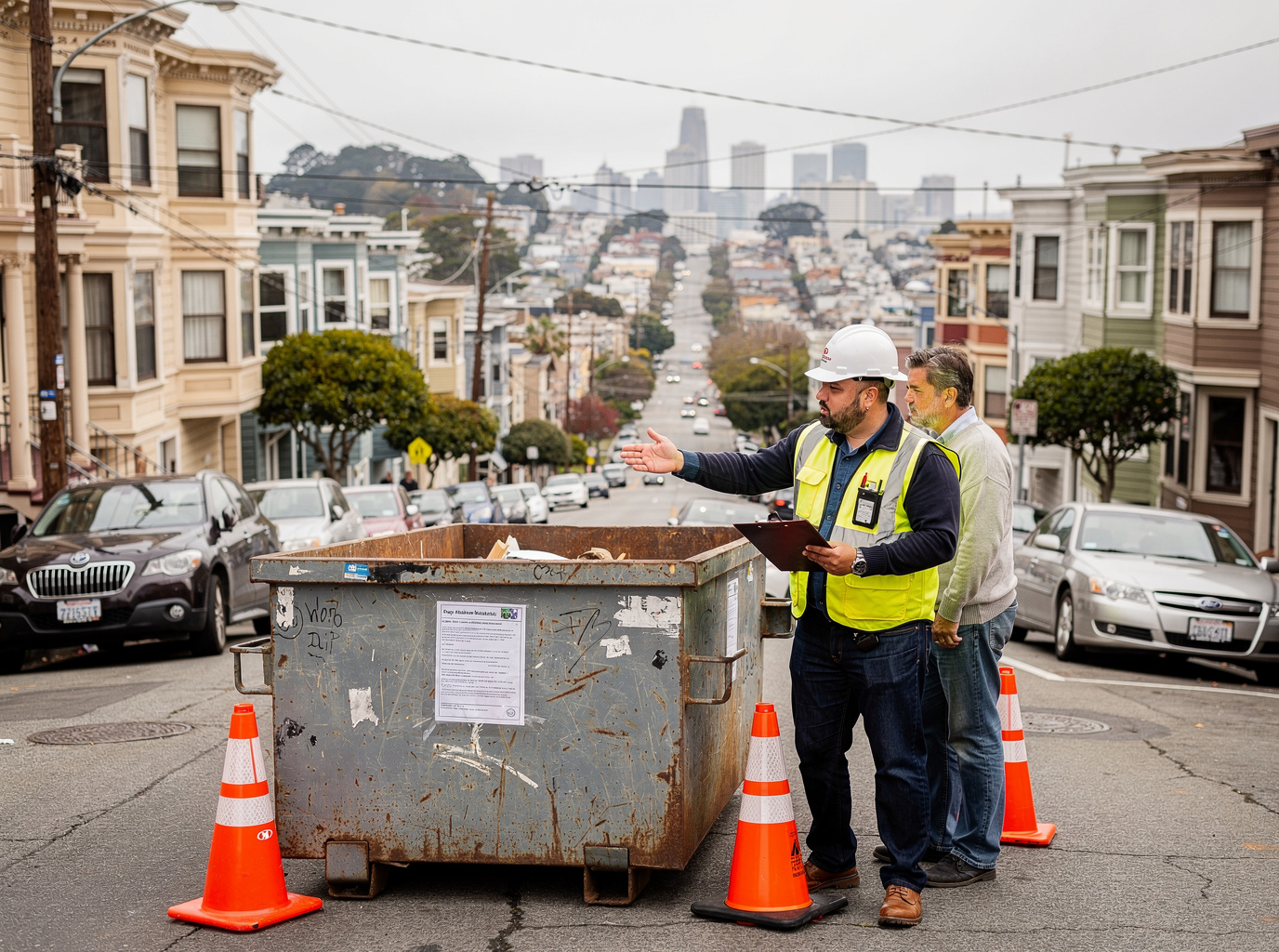
To get a dumpster permit in San Francisco, submit an application to the Department of Public Works for any placement on public streets or sidewalks, as private property use often avoids this step entirely.
Understanding When a Permit Is Required
San Francisco mandates permits whenever a dumpster occupies the public right-of-way, which covers most residential jobs in dense neighborhoods. Older housing stock in the Mission District and Castro often lacks wide driveways, forcing units onto the street. The same rule applies in North Beach and Chinatown where narrow alleys limit options. Wet winters increase runoff concerns, so inspectors check that placements do not block storm drains along streets like those near Golden Gate Park. Mild summers reduce some weather delays, yet the year-round need for permits remains consistent across the city and nearby Oakland or Berkeley jobs.
Application Process Through City Departments
Begin by gathering site photos, a sketch of the proposed location, and proof of insurance before filing with Public Works. Applications can be submitted online or in person, and reviewers examine traffic flow, especially on steep grades in Russian Hill or Pacific Heights. Once submitted, expect coordination with SFMTA if the spot affects bus routes or parking meters in the Financial District. Many operators also check with the local police non-emergency line for temporary no-parking signs. Linking the permit to a Dumpster Rental contract helps ensure the rental company knows the exact placement dates and restrictions.
Neighborhood-Specific Challenges
Each San Francisco neighborhood presents distinct permitting hurdles tied to its terrain and housing age. In the Sunset District and Richmond District, sandier soils and frequent fog can affect how long a unit stays stable once placed. The Marina District and Nob Hill feature tighter parking and more frequent street sweeping, requiring extra documentation on the application. Haight-Ashbury and the Castro contain many Victorians with limited rear access, pushing more permits toward sidewalk use. Reviewers pay close attention to cable car routes near the Cable Car Museum and tourist zones around Fisherman's Wharf, where pedestrian volume stays high year-round.
Handling Hills and Traffic Flow
Steep grades common throughout San Francisco change how dumpsters are secured and how long permits take to approve. Placing a Dumpster on San Francisco Hills Without Blocking Traffic outlines chock requirements and wheel placement that inspectors verify on site. Operators in areas like Lombard Street or Coit Tower often request additional time for engineering review because runoff during wet winters can shift unsecured units. Coordination with neighbors for temporary parking removal is routine in these zones and should be documented in the permit packet.
Weight Limits and Ongoing Compliance
After the permit is issued, operators must still follow city weight rules to avoid daily fines. Dumpster Rental Weight Limits and Overage Fees in San Francisco details how Public Works calculates overages on jobs that cross into Residential Dumpster Rental scopes. Regular inspections can occur, especially when units sit near Transamerica Pyramid construction zones or along routes serving Alcatraz Island ferries. Keeping the permit number visible on the unit helps crews verify compliance quickly during wet winter months when street conditions change fast.